OT Cybersecurity for Water & Wastewater
Protecting Water Infrastructure and Public Health
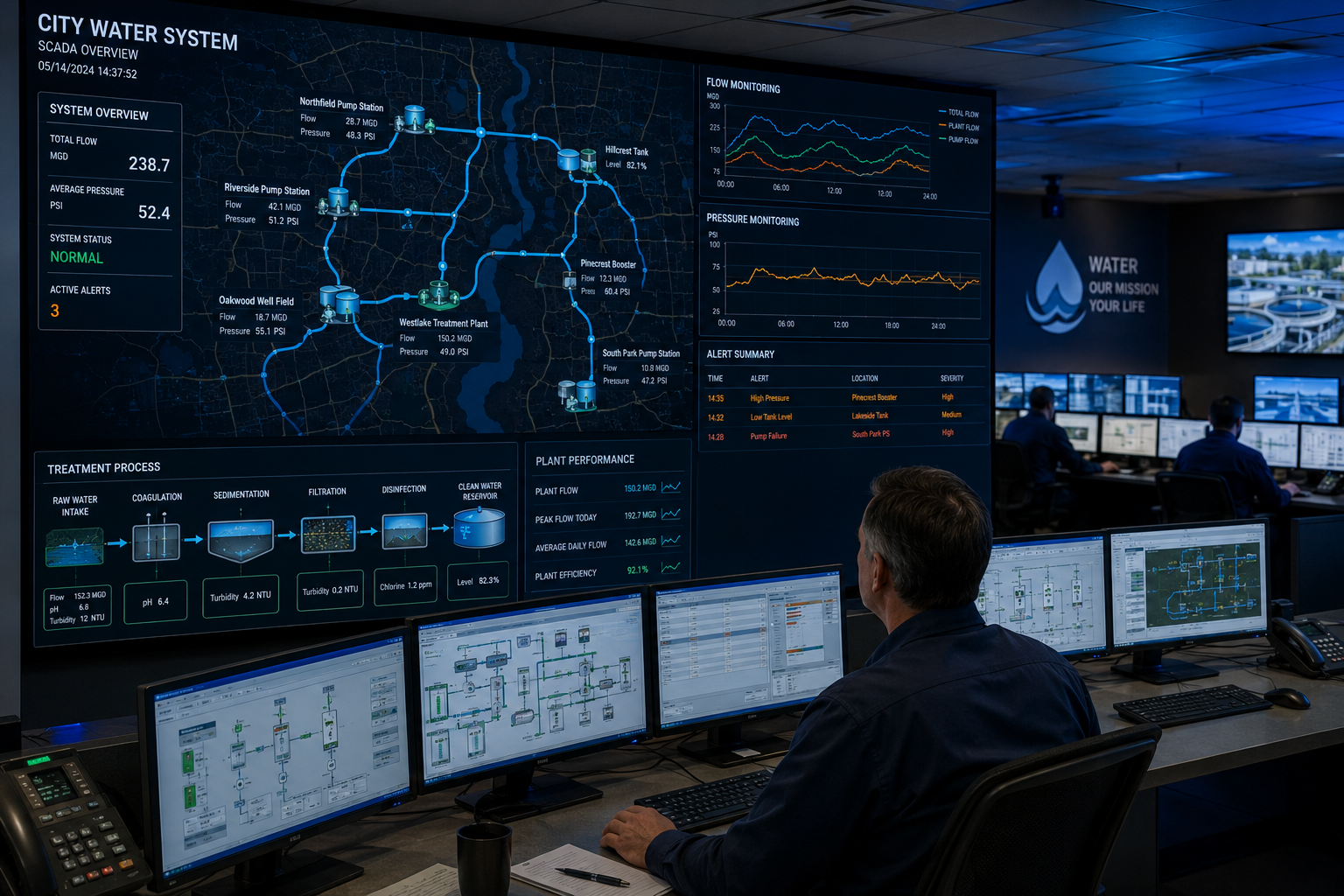
Water and wastewater utilities depend on SCADA systems, PLCs, and remote telemetry units to manage treatment processes, distribution networks, and pumping stations across geographically dispersed infrastructure. These systems directly control the safety and quality of water supplied to millions of people.
Water and Wastewater Industry
A successful cyberattack on water infrastructure can cause contamination, widespread service disruption, or environmental harm at a public health scale. CyInfra helps utilities build the OT security posture that this critical responsibility demands.
Key Cybersecurity Challenges Facing the Water and Wastewater Sector
Geographically Dispersed OT Assets
Water utilities operate hundreds of remote pumping stations, treatment works, and telemetry sites — each representing an OT environment that must be secured and monitored, often with limited on-site staffing.
Legacy SCADA and Remote Telemetry
Ageing RTUs, PLCs, and SCADA systems — many without security capabilities or vendor support — remain the operational backbone of water and wastewater infrastructure across most utilities.
Public Health Consequences of Attack
Compromise of chemical dosing systems, treatment controls, or distribution management can directly endanger public health at a scale that few other sectors face.
Escalating Regulatory Obligations
AWIA in the US, NIS2 in Europe, and national CNI protection frameworks impose formal cybersecurity risk assessment, reporting, and remediation obligations on water utilities.
The Threat Landscape in Water & Wastewater
- Water utilities are designated critical national infrastructure in most jurisdictions, making them priority targets for nation-state actors seeking to cause public harm, geopolitical disruption, or to demonstrate cyber capabilities against essential services.
- Documented attacks — including the 2021 Oldsmar water treatment incident in the US — demonstrate that adversaries are actively probing water treatment control systems with the intent to manipulate chemical processes.
- Remote access connections to dispersed pumping stations and treatment sites — often implemented without adequate authentication or monitoring — create persistent, low-visibility entry points for attackers.
- Regulatory scrutiny is intensifying globally, with AWIA in the US and NIS2 in Europe placing formal cybersecurity risk assessment and incident reporting obligations on utilities that have historically operated with minimal security governance.
CyInfra for Water & Wastewater
Securing Your Water & Wastewater Operations
- Map and inventory all OT assets across treatment plants, pumping stations, distribution networks, and remote telemetry sites.
- Assess the security posture of SCADA, PLC, and RTU environments against ISA/IEC 62443 and NIST CSF frameworks, prioritising highest-consequence assets.
- Implement network segmentation to isolate treatment control systems from corporate IT, third-party vendor access, and remote monitoring infrastructure.
- Establish real-time monitoring and anomaly detection to identify operational deviations and potential cyber events before they impact treatment or distribution.
- Develop and test incident response plans aligned with AWIA, NIS2, and national CNI protection requirements — including public health notification protocols.
Water & Wastewater OT systems must stay secure.
Protect critical water treatment plants and wastewater infrastructure, ensure secure connected monitoring systems, and maintain real-time visibility of flow, quality, and treatment processes.
Why Choose CyInfra for Water & Wastewater Security
CyInfra brings specialist OT cybersecurity expertise to help your utility protect critical infrastructure, meet regulatory obligations, and maintain the public trust you depend on.